
OCTOBER 2026 DOCUMENT OF THE MONTH
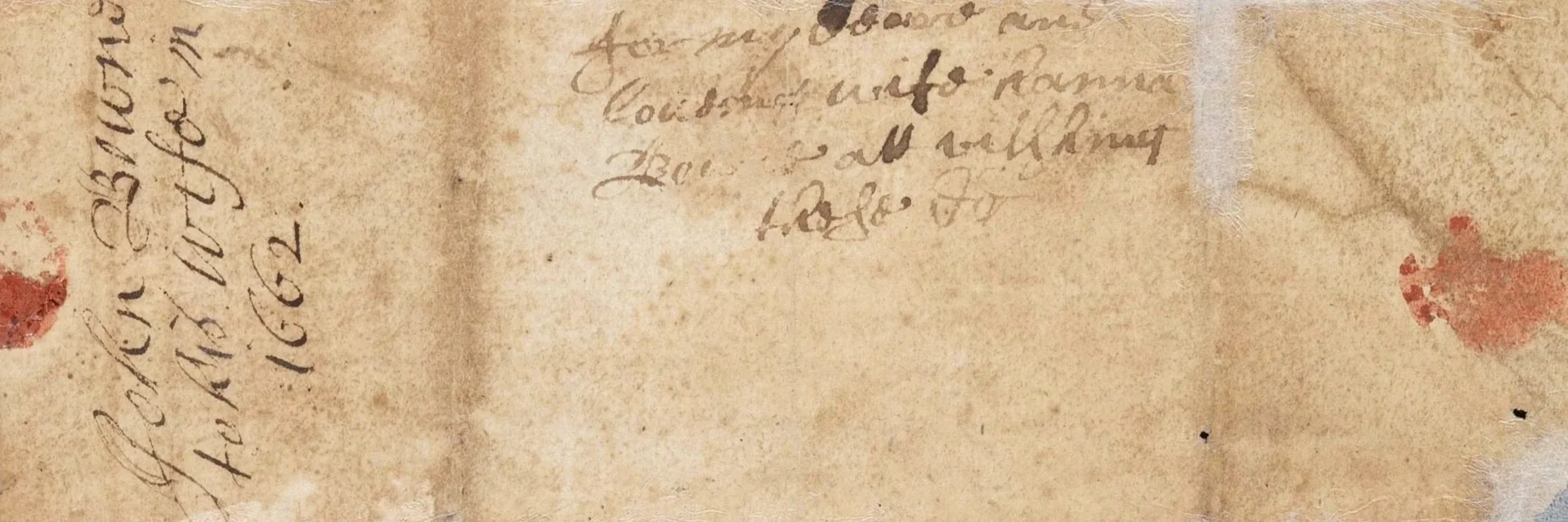
TITLE: Letter from Mary Nottingham to Dinah Underhill Bowne
DATE: October 31, 1757
Note: Dinah Underhill Bowne was the wife of John Bowne’s grandson and namesake, John Bowne III (1698-1757.) She lived at Bowne House following their marriage in 1738. A full transcription of this letter appears at the bottom of the post.
Post by Henry Blake, Bowne House Archival Intern
On October 31, 1757, a certain Mrs. Mary Nottingham of Tortola wrote a letter to Dinah Underhill Bowne of Bowne House. The letter described a treacherous sea voyage undertaken by Nottingham during which she and the rest of those onboard were met with many trials at sea, including a rough storm as well as a leak sprung aboard the ship. Ultimately, Nottingham made safe harbor in Tortola at Fat Hog Bay, where she was greeted with great joy by her friends as well as “the Poor Neagrows.”
While there are only a few documented correspondences between Dinah Bowne and Mary Nottingham that document the lives of two people whose stories may be mostly lost to time, the letters reveal merely the surface of a deeper story. The letter itself documents Nottingham’s voyage aboard a ship commanded by Captain John Scott Lawrence, which embarked from New York and arrived in Tortola on October 26th of 1757; five days before Mary would write a letter to Mrs. Bowne recounting her passage.
Dinah Underhill Bowne, the recipient of these letters, was born in 1705, the daughter of Samuel Underhill. She was a descendant of John Underhill (1609-1672), a leader of the Massachusetts Bay Colony who later became a Quaker. Dinah married John Bowne III in 1738 and spent the rest of her life living in the Bowne House. Following her husband’s death in 1757, Dinah inhabited the west end of the house and may have been responsible for many of the house’s renovations from around that time. She passed away in 1770. Through Dinah’s various correspondences with other Quaker leaders such as Mary Nottingham, we can infer that Dinah Underhill Bowne had the gift of ministry.
According to historical accounts from the Quaker Community of Tortola, Mary Nottingham was originally married to Captain John Hunt, who is said to have beaten her for being a part of the Quaker faith. By 1751 she had remarried to Samuel Nottingham, accompanying him on a preaching trip to Barbados. Later, Nottingham was appointed as an overseer of Fat Hog Bay on Tortola.

A 1798 map of Tortola in the British Virgin Islands. Map courtesy of Royal Museums Greenwich.
The story of Mary and Samuel Nottingham is also one that appears in the early history of the anti-slavery movement. In 1776, the Nottinghams were paid a total of five pounds by a group of 25 slaves to reclaim their freedom. Six years later, the Nottinghams granted the slaves the Long Look Estate on Tortola, to build a community and sustain themselves. It has been claimed that the Long Look Estate was the first free black community in the new world and it would exist amongst the slave plantations of Tortola for decades, until slavery was abolished in the British Virgin Islands in the 1830s.
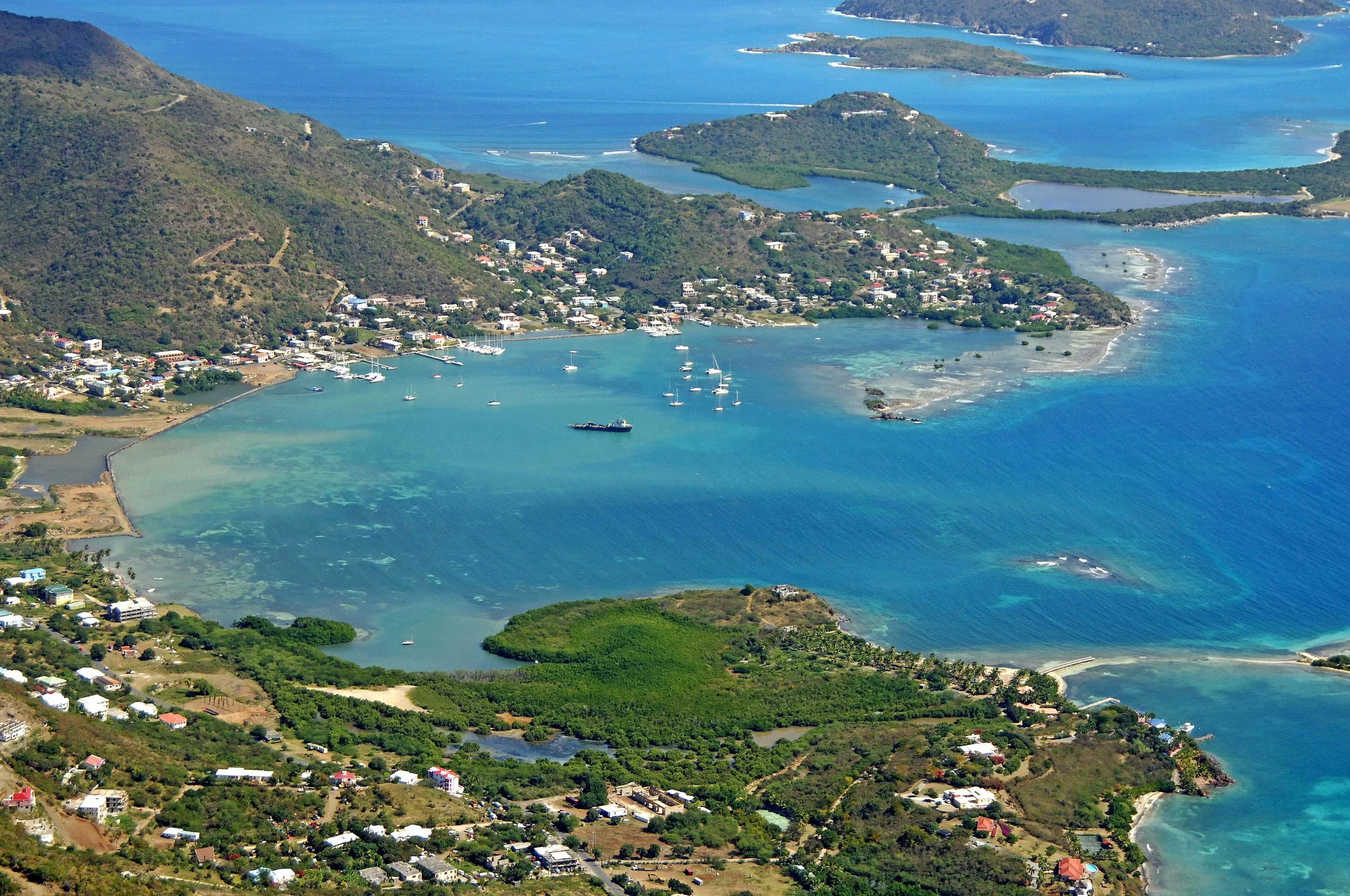
Fat Hog Bay, as it appears today.
The Nottinghams, while relatively obscure names to most people today, nonetheless partook of the prominent role that the Quakers played in history. Mary and Samuel Nottingham took part in the relatively humble beginnings of the abolition of slavery in the New World, thus proving that even the smallest events can have consequences that shape the grand scheme of history.
You can read more about Long Look and the legacy of the Nottingham estate here: https://en.wikipedia.org/wiki/Long_Look_Estate.
https://thebviinsider.com/the-bvi-celebrates-the-250th-anniversary-of-nottingham-estate/
https://gov.vg/news/self-manumission-long-look-free-people-and-250-years-legacy
FULL TRANSCRIPTION
Note: spelling & punctuation have been standardized
Dear Friend Tortola, 31 day of 10 month 1757
Dinah Bowne, This serves to acquaint thee that I am
through mercy arrived safe at Fat Hog Bay and received with
great joy, both with my friends and likewise with the
poor Negroes,[1] but I met with many trials at sea; the first
was a hard storm, and in that extremity the Cap’n saw 14
sail of ships; the next was the vessel sprung a leak so that
the men was forced to pump the vessel every hour for several
days and nights; the next was we were put to our allowance
for water.[2] I wept when I heard the Cap’n say, Tomorrow I must put all on board to an allowance; still, I had secret hope
that the Lord would have mercy on us and would not let us
perish on the sea, and the merciful Lord in whom I
trusted was pleased to strengthen and support me under all
these difficulties. I found His blessed promise fulfilled where
He says he will be with his people in the sixth trouble, yea
in the seventh trouble;[3] also, in the morning the day that we made Spanish Town in the evening, the Cap’n saw 8 sail of
vessels together and two afterwards that same day; I think
in all there was some seven and twenty sail upon our passage,
but praised be the Lord there came none a-nigh us.[4] I write these few lines for all my dear friends’ satisfaction,
whom I know will be glad to hear of my safe arrival,
and my very dear love is to them all and I hope and trust
in the Lord that we shall remember each other in the best
sense, altho’ we are far separated one from another. So I conclude
with dear love to thee and all thy family, and remain thy
Friend in the unchangeable Truth. ____ Mary Nottingham
NOTES:
[1] “the poor Negroes”: probably the enslaved African laborers on the Nottingham plantation, later manumitted and then endowed with land to found the free Black community of Long Look.
[2] “Put to our allowance for water” refers to rationing of water aboard ship.
[3] Mary’s relief that no other ships approached hers reflects the fear of piracy in the Atlantic and Caribbean oceans at the time, as well as the possibility of encountering naval vessels from a hostile country (the French and Indian War was being fought between England, France, and their respective Native American allies during this time).
[4] Reference to the Book of Job in the Old Testament: “He shall deliver thee in six troubles: yea, in seven there shall no evil touch thee.” - Job 5:19, King James Bible
